DTF printing is one of the fastest-growing decoration methods for custom apparel in Canada — and for good reason. If you’ve heard the term but aren’t sure what it means, how it works, or whether it’s right for your order, this guide covers everything you need to know in plain language.
No jargon. No sales pitch. Just a clear explanation of what DTF printing is, what it’s best for, and when to choose something else.
What Does DTF Stand For?
DTF stands for direct to film. It’s a printing process where a design is printed onto a special transfer film, coated with a hot-melt adhesive powder, and then heat-pressed onto a garment.
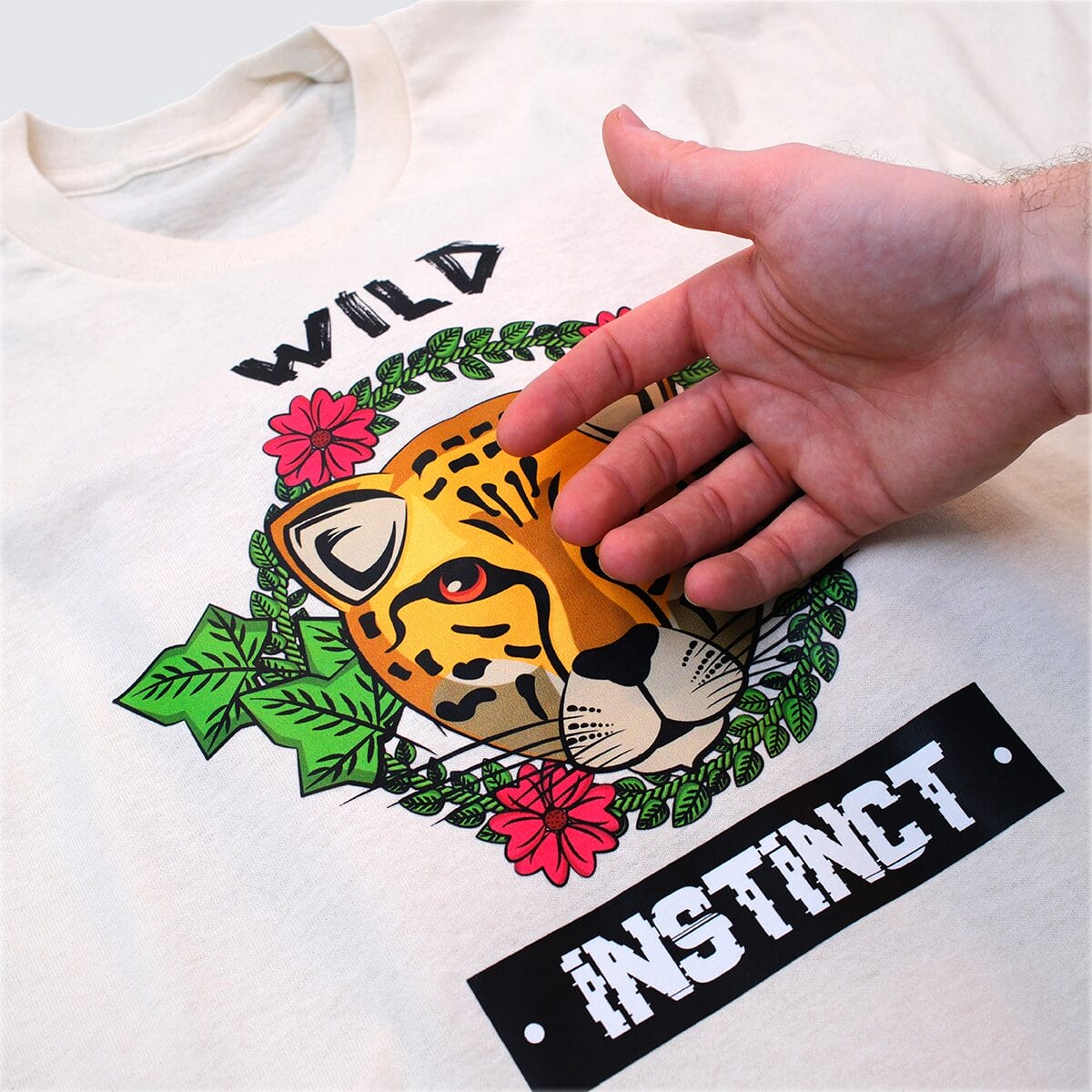
The result is a vibrant, full-colour print that bonds directly to the fabric fibres — producing sharp edges, fine detail, and colours that pop.
How Does DTF Printing Work? Step by Step
Understanding the process helps you know what to expect when you place an order.
Step 1 — Design preparation Your artwork is prepared as a high-resolution file. DTF handles full colour, gradients, fine lines, and even photographic detail — so almost any design works.
Step 2 — Printing onto film The design is printed in reverse onto a clear PET film using specialized DTF inks. White ink is printed as an underbase to ensure colours stay vibrant on any fabric colour.
Step 3 — Powder application A hot-melt adhesive powder is applied evenly over the wet ink. This powder is what bonds the print to the fabric during pressing.
Step 4 — Curing The film is passed through a curing oven or heat gun to melt and set the adhesive powder onto the print.
Step 5 — Heat pressing The cured transfer is placed face-down on the garment and pressed with a heat press at the correct temperature and pressure. The film is peeled away — either hot or cold depending on the transfer type — leaving the design bonded to the fabric.
Step 6 — Finished product The result is a durable, vibrant print that’s wash-resistant, flexible, and works on virtually any fabric type.
Why Are Canadian Businesses Switching to DTF Printing?
DTF has rapidly taken over from older decoration methods like heat transfer vinyl (HTV) and plastisol transfers for several key reasons.
No minimums. Unlike screen printing which requires setup costs that only make sense at volume, DTF transfers can be produced one at a time. This makes it ideal for small runs, sample orders, and businesses that need flexibility.
Works on almost any fabric. Cotton, polyester, blends, nylon, denim, leather — DTF adheres to virtually any material. This is a significant advantage over screen printing which works best on cotton, and embroidery which struggles on thin or stretchy fabrics.
Full colour at no extra cost. Screen printing charges per colour — a four-colour design costs more than a two-colour design. With DTF, full colour costs the same as single colour. Gradients, shadows, and photographic imagery are all included.
Fast turnaround. Without screen setup time, DTF orders move quickly. At Kode Garment standard production is 7 to 10 business days — often faster for smaller orders.
Clean, modern results. DTF produces a smooth, slightly raised print with a soft hand feel. It holds up well through repeated washing when applied correctly.
What is DTF Printing Best For?
DTF is the right choice when:
- Your design has multiple colours, gradients, or fine detail
- You need a small run — anywhere from 1 to 300 pieces
- You’re printing on polyester or performance fabric
- You want fast turnaround without sacrificing quality
- You’re decorating items beyond standard t-shirts — bags, hats, jackets, and accessories all work
- You need consistent results across reorders
When is DTF Not the Best Choice?
DTF is excellent but it’s not always the right tool for every job.
Very large bulk orders with simple artwork — if you need 500 identical t-shirts with a two-colour logo, screen printing will likely be more cost-effective per unit once setup costs are spread across the run.
When a raised, textured feel is preferred — embroidery produces a premium, dimensional look that DTF can’t replicate. For workwear, corporate polos, and hats where a professional embroidered look matters, embroidery is still the better choice.
Very dark transfers on very light garments — DTF performs best with the white underbase on darker garments. On white or very light fabrics, some decorators skip the underbase which can affect vibrancy. Ask your decorator how they handle this.
What File Format Does DTF Printing Require?
Sending the right file makes a significant difference in your results.
Ideal formats: PNG with transparent background, AI (Adobe Illustrator), or PDF vector file.
Minimum resolution: 300 DPI at print size. Lower resolution files produce blurry, pixelated results.
Colour mode: RGB produces the most accurate colour output for DTF. CMYK files can be used but may shift slightly in colour.
What to avoid: JPG files with white backgrounds, low-resolution images pulled from websites, and files smaller than the intended print size.
If you’re not sure whether your file is print-ready, send it to your decorator before placing an order. At Kode Garment we review every file and flag any issues before production starts — no surprises.
How Much Does DTF Printing Cost in Canada?
DTF pricing depends on print size, quantity, and the garment being decorated. Here’s a general framework for Canadian businesses:
Small prints (left chest logo, 3–4 inches): most cost-effective, ideal for workwear and branded apparel.
Medium prints (full front, 10–12 inches): standard pricing, works for most apparel orders.
Large prints (oversized, 14+ inches): higher transfer cost but still competitive for full-colour designs.
Quantity affects price — larger runs reduce the per-unit cost of both the transfer and the garment. Rush orders may carry an additional fee depending on timing and volume.
The best way to get accurate pricing is to send your design, quantity, and garment type to your decorator for a quote.
DTF Printing vs Other Decoration Methods
If you’re deciding between DTF and other options:
DTF vs screen printing — DTF wins on small runs and full colour. Screen printing wins on large bulk orders with simple artwork.
DTF vs embroidery — DTF wins on complex artwork and performance fabrics. Embroidery wins on workwear, hats, and premium professional looks.
DTF vs heat transfer vinyl (HTV) — DTF wins on detail, durability, and production speed. HTV is largely being replaced by DTF in professional decoration shops.
For a full comparison of all three methods see our guide: DTF Printing vs Screen Printing vs Embroidery: Which is Right for Your Order?
Ready to Order DTF Printing in Canada?
At Kode Garment we produce DTF transfers and finished garments for businesses, teams, crews, and brands across Canada. Send us your design, your quantities, and your deadline — we’ll review your files, recommend the right approach, and send you a clear quote with no surprises.
📍 Based in Newmarket, Ontario · Shipping Canada-wide 📞 905-235-9444 or Toll Free 1-877-788-5633✉️ info@kodegarment.com